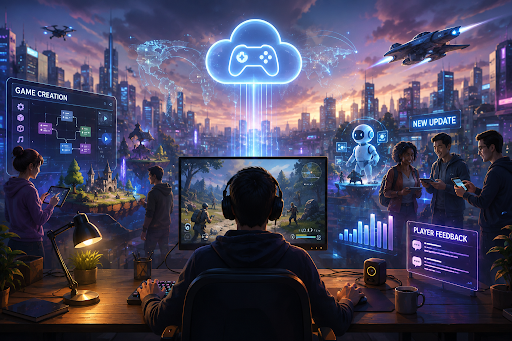
Online games used to mean one specific thing: a handful of genres, built by teams with the technical resources to handle networking, servers, and real-time synchronization. That definition has been quietly dissolving for years, and the pace of change is accelerating. What counts as an online game, and who gets to build one, looks less like the old model every year.
The Old Boundaries of Online Gaming
For most of its history, online gaming was defined by high technical barriers. Building something multiplayer, persistent, or connected required specialized knowledge most creators simply didn’t have. That technical demand meant online games came almost exclusively from studios large enough to justify the investment, which shaped the genres, styles, and creative range of what actually reached players.
What’s Actually Reshaping This Space
Development Speed Catching Up to Player Expectations
Players have grown used to fast content cycles, quick updates, frequent new modes, rapid response to feedback. Traditional development pipelines struggled to keep pace with that expectation, since implementing changes took real technical time. Modern tools close that gap significantly, letting creators respond to what players actually want far faster than before.
Lower Technical Barriers Broadening Who Builds Online Games
The specialized skill that used to gate online game development is no longer the strict requirement it once was. Creators can now build and test online experiences without the deep technical background that used to be non-negotiable, which is quietly expanding who gets to shape this part of the industry.
AI Making Personalization and Adaptation More Practical
Static, one-size-fits-all experiences are giving way to games that respond more meaningfully to individual players, without requiring a team to manually script every possible variation. This shift is subtle but significant, since it changes what players come to expect from an online experience over time.
Where This Is Already Showing Up
More Genres Becoming Viable for Smaller Creators
Genres that used to require a large studio’s resources are increasingly achievable for small teams and solo creators. Firefighter Emergency reflects this shift well, a focused, well-executed concept with real polish, built without the large technical pipeline that a project like this traditionally required.
Faster Feedback Loops Between Players and Creators
Because iteration has gotten so much faster, creators can respond to player feedback in days rather than months. This tightens the relationship between what players want and what actually gets built, something that used to be far more one-directional in traditional online game development.
A Wider Range of People Building Online Games
People trying an AI game maker for the first time increasingly include creators with no networking or backend experience at all. That population didn’t have a realistic path into online game development a few years ago, and their growing presence is reshaping what kinds of online games actually get made.
What Players Are Starting to Expect
As faster iteration becomes normal, players are getting used to online games that evolve quickly rather than staying static for long stretches between updates. This raises the bar for everyone building in the space, since a slow response to feedback increasingly stands out against competitors who can adjust and ship changes far more quickly.
There’s also a growing expectation around variety. With more creators able to build online experiences, players have access to a wider range of niche and unconventional concepts that larger studios might never have greenlit, simply because the cost of testing those ideas has dropped so significantly.
What Hasn’t Changed Underneath the Technology
Good Design Still Requires Human Judgment
Faster tools and broader access don’t replace the need to understand what actually makes an online game fun to keep playing. Pacing, balance, and the specific feeling a game is chasing still depend entirely on the creative judgment of the people building it.
Real Player Feedback Remains Essential
No amount of technical capability changes the need to watch real players interact with a game and adjust based on what actually happens. If anything, faster iteration makes that feedback more valuable, since there’s more room to act on it quickly.
Community and Connection Still Drive Engagement
The technology enabling faster, more personalized online games doesn’t replace what has always made online gaming compelling, playing with and against other people. Whatever changes on the technical side, that social core remains the reason players keep coming back.
Final Thoughts
Technology is changing the future of online games not by replacing what made them appealing in the first place, but by removing the barriers that used to limit who could build them and how quickly they could evolve. The games that stand out going forward will likely come from a much wider range of creators than the industry has ever seen before, shaped by faster iteration and a tighter connection to what players actually want.