Trees don’t send alerts when something’s wrong. No notifications, no warning lights—just subtle changes that most homeowners walk past every day without a second glance. A slightly discolored canopy here, a patch of peeling bark there. Easy to overlook. Potentially costly to ignore.
That’s where professional tree health assessment comes in, and it’s one of the most valuable services a property owner can invest in.
At Arborwright Tree Care, we’ve seen firsthand what happens when tree health goes unchecked. What starts as a minor fungal infection or a small patch of root damage can quietly escalate into full structural failure—sometimes within a single growing season. Getting ahead of these issues isn’t just smart property management. It’s peace of mind.
What Does a Tree Health Assessment Actually Involve?
Many people picture a brief walk-around when they hear the term “assessment.” In reality, a professional tree health evaluation is a thorough, multi-layered process that examines far more than what’s visible on the surface.
The Arborwright Tree Care team evaluates:
- Crown condition — Are the leaves the right color for the season? Is dieback spreading from the tips inward?
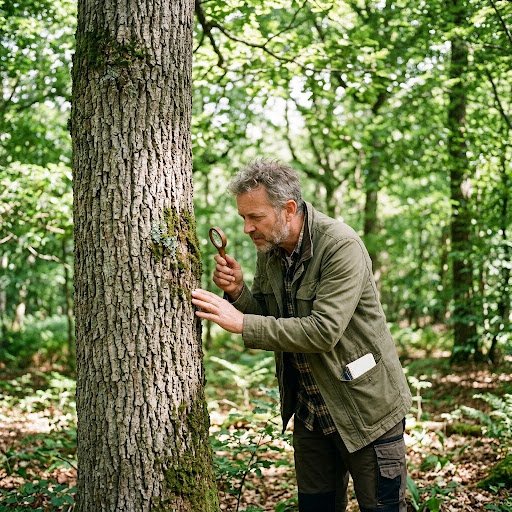
- Bark integrity — Cracks, cankers, unusual swelling, or fungal conks can signal decay beneath the surface.
- Root zone health — Compaction, construction damage, and soil erosion affect stability long before any visible symptoms appear.
- Structural integrity — Co-dominant stems, weak branch unions, and excessive lean all factor into risk assessment.
- Pest and disease pressure — From bark beetles to anthracnose, identifying the problem correctly is the first step to treating it effectively.
Each evaluation produces a clear picture of where a tree stands—and what it needs to stay standing.
Why Timing Matters More Than Most Homeowners Realize
There’s a common misconception that tree care is reactive—that you call a professional only after something goes wrong. The reality is that the window for effective intervention is often narrow.
Many tree diseases and structural issues are highly treatable when caught early. Root rot, for example, can be managed with soil aeration, adjusted irrigation, and targeted fungicide applications—but only if it’s identified before it reaches the structural roots. Wait too long, and removal becomes the only safe option.
Seasonal timing matters too. Spring and early summer assessments allow certified arborists to spot stress patterns as they emerge, while late-season evaluations help identify winter damage and set the stage for a strong recovery the following year. Arborwright Tree Care recommends annual assessments for mature trees and twice-yearly checks for trees near structures, high-traffic areas, or those with a history of disease.
The Hidden Value of Knowing What You Have
Most property owners are surprised to learn that a professional assessment doesn’t just identify problems—it also identifies assets.
A mature, structurally sound oak or elm adds measurable value to a property. According to the USDA Forest Service, well-maintained trees can increase residential property values by up to 15%. But realizing that value means knowing which trees are truly thriving and which ones are carrying concealed risk.
An Arborwright Tree Care assessment gives you exactly that clarity. The team doesn’t just flag what’s failing—they document what’s healthy, what’s worth protecting, and what proactive care will deliver the best long-term return on your landscape investment.
What Sets Arborwright Tree Care Apart
Plenty of companies offer a walk-and-talk tree inspection. Arborwright Tree Care delivers something more structured and more useful.
Every assessment is conducted by ISA-certified arborists with extensive field experience across a wide range of species, soil types, and regional conditions. The process includes written documentation, photographic records, and a prioritized care plan—so you’re never left wondering what to do next or why.
The team also takes time to explain findings in plain language. No jargon, no unnecessary alarm. Just honest, professional guidance that helps property owners make informed decisions about their trees and their land.
How Catching One Problem Early Can Save Thousands
The financial case for regular tree health assessment is straightforward. Emergency tree removal—especially for large trees near structures—can cost anywhere from $1,500 to $5,000 or more, depending on complexity. Add potential property damage if a compromised tree fails, and the numbers climb quickly.
Compare that to the cost of an annual assessment and any recommended preventive treatments, and the math is clear. Proactive care is almost always less expensive than reactive removal and repair.
Beyond the dollars, there’s the disruption factor. Emergency tree work is rarely convenient. It involves equipment, crew, time, and cleanup—often at the worst possible moment. Staying ahead of tree health issues means staying in control of the schedule, the budget, and the outcome.
Protecting the Trees That Define Your Property
A professional tree health assessment is the single most effective step you can take to protect your landscape, preserve mature trees, and prevent unexpected hazards before they become emergencies. Arborwright Tree Care brings the expertise, the tools, and the commitment to make every assessment count.
Whether you have a single specimen tree you’d hate to lose or an entire property full of mature canopy, the Arborwright team is ready to take a closer look. Schedule your tree health assessment today and get the clarity your landscape deserves.