Introduction
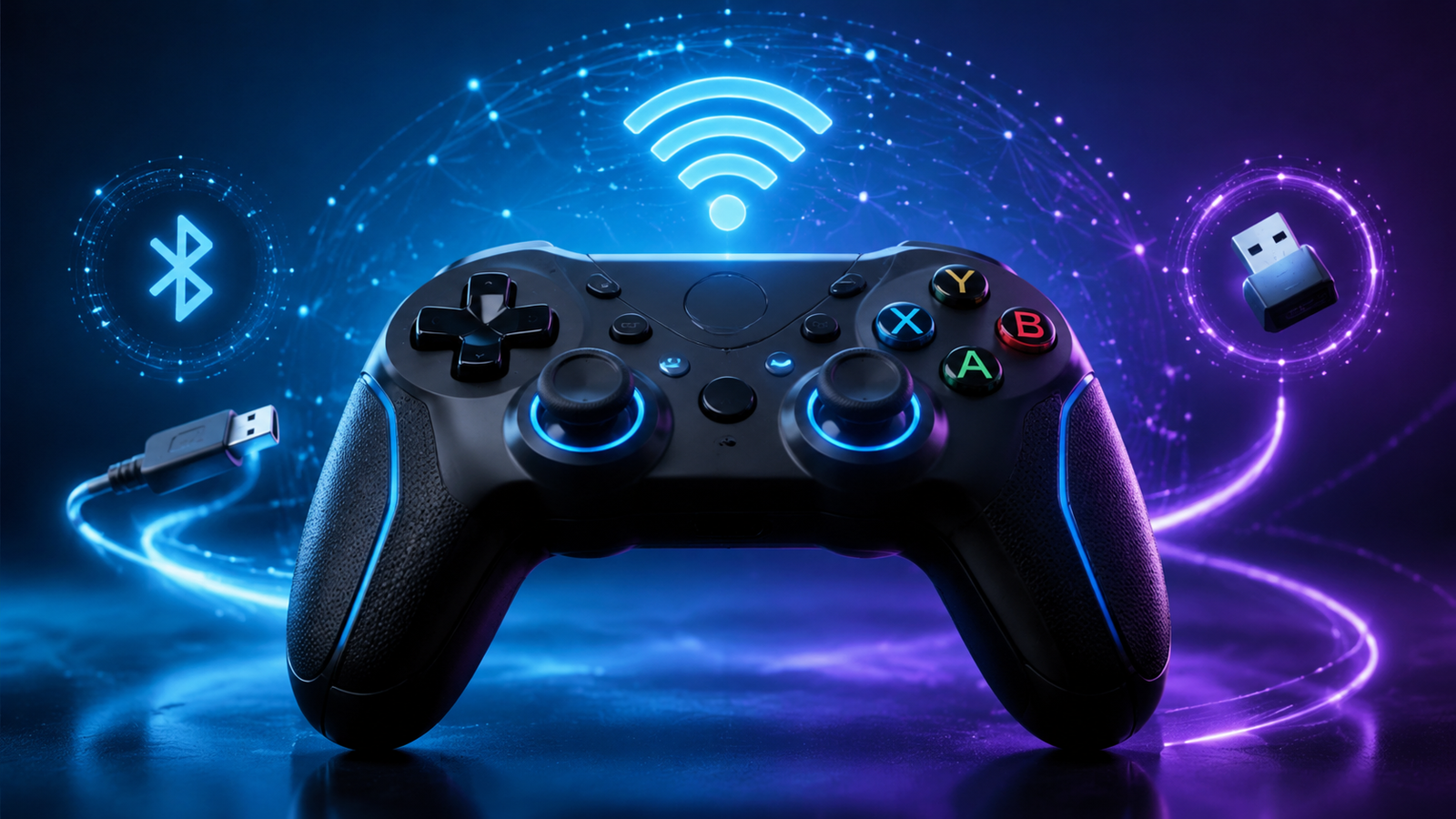
Connectivity hssgamepad refers to the full communication framework that enables an HSS game controller to interact with devices such as PCs, smartphones, tablets, and supported gaming systems. It includes wired USB communication, Bluetooth pairing, and wireless dongle-based transmission. The system is designed to ensure that every input from the controller is translated into real-time digital commands with minimal delay and stable signal integrity.
In modern gaming environments, connectivity hssgamepad plays a critical role in performance because it directly affects latency, responsiveness, and synchronization between user input and game output. Any instability in connectivity leads to lag, disconnections, or incorrect input mapping. This is why understanding the internal structure, connector system, and troubleshooting methods is essential for consistent gameplay performance.
Connectivity architecture of hssgamepad system
The connectivity hssgamepad architecture is based on a multi-channel communication system that supports different transmission modes depending on device compatibility and user preference. These modes generally include Bluetooth Low Energy communication, USB HID wired communication, and 2.4GHz wireless transmission through a dedicated receiver. Each mode is built to serve a specific balance between stability, mobility, and latency performance.
The architecture works through a layered signal process where physical input is captured by the controller firmware, converted into digital packets, and transmitted to the host device. The host system then processes these signals through drivers and maps them to in-game actions. This layered structure ensures compatibility across multiple platforms while maintaining a consistent input response system.
Connector hssgamepad and hardware interface system
Connector hssgamepad refers to the physical and wireless interfaces that establish the link between the controller and the gaming device. This includes USB-C or micro USB cables for wired connectivity, Bluetooth modules for wireless pairing, and USB dongles for 2.4GHz transmission. Each connector type influences latency, stability, and compatibility differently depending on usage conditions.
In wired mode, the connector provides direct signal transmission with almost zero delay and stable power delivery, making it suitable for competitive gaming. In wireless modes, the connector system relies on radio frequency or Bluetooth protocols, which prioritize convenience and mobility but may introduce minor latency variations. The efficiency of connector hssgamepad performance depends heavily on hardware quality, driver support, and signal environment.
Connectivity issues hssgamepad and common failure causes
Connectivity issues hssgamepad commonly occur due to signal interference, low battery levels, outdated drivers, or incorrect pairing configurations. One of the most frequent problems is intermittent disconnection, which usually happens when Bluetooth signals are disrupted by nearby wireless devices or when the controller is operating at a low power level.
Another common issue involves device recognition failure, where the system does not detect the controller at all. This is often caused by faulty cables, incorrect USB ports, or missing driver support on the host device. Input delay is also a significant issue, particularly in Bluetooth mode, where network congestion or background device activity increases response time.
Instructions manual hssgamestick setup and pairing process
The instructions manual hssgamestick setup process typically begins with charging the controller fully to ensure stable initialization. After powering on, the user selects the required mode such as Bluetooth, USB, or 2.4GHz wireless. In Bluetooth mode, the controller enters pairing mode through a dedicated button combination until the LED indicator starts flashing.
Once the device appears in the host system’s Bluetooth list, pairing is confirmed and the LED stabilizes to indicate successful connection. In wired mode, the connection is established instantly once the USB cable is inserted. The manual also emphasizes calibration steps, where joystick movement and button inputs are tested within system settings to ensure proper response mapping and sensitivity alignment.
Tutorial by hearthstats hssgamepad configuration methods
Tutorial by hearthstats hssgamepad typically refers to configuration guides that focus on optimizing controller performance for gaming environments. These tutorials often emphasize input mapping, sensitivity adjustment, and reducing latency through correct mode selection. The goal is to achieve a balance between responsiveness and stability across different platforms.
In these configuration methods, users are guided to select the most efficient connectivity mode depending on game type. For competitive games, wired or 2.4GHz modes are recommended, while casual gameplay may use Bluetooth for convenience. The tutorial also highlights calibration techniques that improve directional accuracy and trigger response timing in real gaming scenarios.
Performance optimization for connectivity hssgamepad
Performance optimization for connectivity hssgamepad involves improving signal stability, reducing latency, and minimizing external interference. One of the most effective methods is selecting the appropriate connection mode based on usage requirements. Wired mode provides the lowest latency, while 2.4GHz wireless offers a balance between speed and mobility.
Another optimization method involves maintaining a clear signal environment by reducing the number of active Bluetooth devices and avoiding physical obstructions between the controller and receiver. Firmware updates, driver updates, and system configuration adjustments also contribute to smoother performance and reduced connectivity disruptions during gameplay.
Connectivity behavior and signal transmission analysis
The connectivity hssgamepad signal transmission system operates differently depending on the selected mode. USB wired communication uses direct polling through HID protocol, which ensures continuous and stable data transfer with minimal delay. Bluetooth communication relies on packet-based transmission, which introduces slight latency due to encoding and decoding cycles.
The 2.4GHz wireless system uses frequency hopping techniques to maintain a stable connection even in environments with signal congestion. This makes it more reliable than standard Bluetooth in competitive gaming scenarios. Each method has its own trade-off between speed, stability, and mobility, which defines overall user experience.
Connectivity troubleshooting hssgamepad solutions
Connectivity troubleshooting hssgamepad issues requires systematic diagnosis of hardware, software, and environmental factors. The first step is resetting the connection by removing existing pairings and re-establishing a fresh link between devices. This often resolves minor synchronization errors and temporary glitches.
If issues persist, checking battery levels, changing USB ports, or replacing cables can resolve hardware-related problems. On PC systems, updating or reinstalling HID drivers often restores proper recognition. Reducing wireless interference from routers and other Bluetooth devices also improves overall stability and reduces signal dropouts.
Conclusion
Connectivity hssgamepad represents a multi-layered communication system designed to ensure stable and responsive interaction between a game controller and host devices. It integrates Bluetooth, wired USB, and 2.4GHz wireless technologies to support different usage scenarios while maintaining input accuracy and performance consistency.
Understanding connector hssgamepad systems, connectivity issues hssgamepad causes, and proper instructions manual hssgamestick setup procedures allows users to optimize performance effectively. Combined with configuration insights from tutorial by hearthstats hssgamepad methods, users can achieve stable, low-latency, and reliable gaming connectivity across multiple platforms.