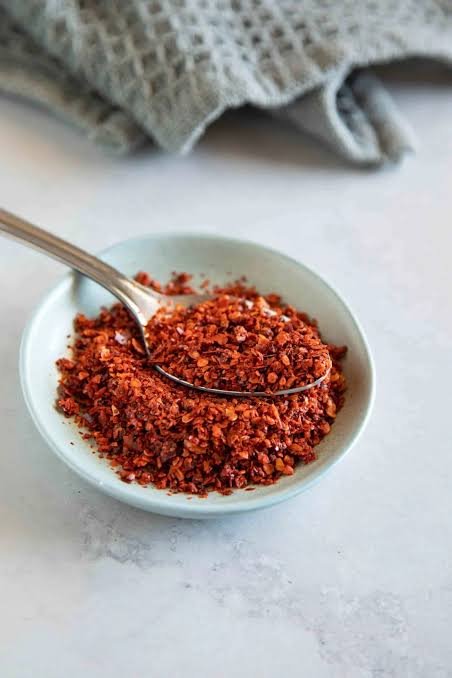
Most chili flakes are a blunt instrument. The standard red pepper flakes sitting in a shaker on every pizza counter in America are a mix of whatever hot peppers were cheapest, seeds and all, and their job is heat. Not flavor — heat. They deliver it, they scorch the top of your palate, and then they get out of the way.
Aleppo pepper does something else entirely, and once you have a jar of it, the shaker starts collecting dust.
It’s coarse, damp-looking, and a deep brick red that leans toward burgundy. The flavor is fruity and slightly sweet, with a raisin-and-sun-dried-tomato quality and a distinct tang underneath. The heat arrives late, builds gently, and settles at a level most people describe as pleasantly warm rather than hot — somewhere around 10,000 Scoville units, which is roughly a fifth the intensity of typical crushed red pepper and about the same as a mild jalapeño.
That combination — real chili flavor with heat you can keep eating — is rarer than it should be.
Where it comes from, and what that means now
Aleppo pepper takes its name from the Syrian city, and the variety behind it is the Halaby pepper, grown across northern Syria and southern Turkey. The traditional process is what makes it distinctive: the peppers are harvested ripe, seeded, sun-dried, then crushed and cured with salt and often a little oil. That salt-and-oil cure is why the flakes stay slightly moist and clump together instead of rattling like dust, and it’s why the flavor is rounded rather than raw.
Since 2012, the Syrian conflict has largely displaced production out of Aleppo itself, and most of what’s sold today is grown and processed in Turkey — where it’s known as pul biber or Halep biber. Turkish production is legitimate and often excellent; this isn’t a case of substitution with something inferior. But it’s worth knowing what you’re buying, because the name has also been applied loosely to generic crushed red pepper by less scrupulous sellers.
The tells for the real thing: the color is dark red-brown rather than bright orange-red, the texture is coarse and slightly oily-damp, there are few or no visible seeds, and the ingredient list mentions salt and possibly sunflower oil. If it’s bone dry, bright orange, and full of pale seeds, it isn’t Aleppo pepper regardless of the label.
Why the seeds matter more than you’d think
Standard crushed red pepper includes the seeds and the pith, which is where most of the capsaicin lives. That’s the source of the harsh, throat-hitting heat. Aleppo pepper is seeded before crushing, so what’s left is almost entirely flesh — the part that carries sugar, fruit acids, and the aromatic compounds that make a pepper taste like a pepper rather than just burn like one.
This is also why Aleppo behaves so differently in cooking. Because the heat is milder and the flavor is stronger, you can use it in quantities that would be absurd with regular flakes. A teaspoon of Aleppo across a sheet pan of vegetables is seasoning. A teaspoon of standard red pepper flakes across the same pan is a dare.
If you want a longer read on the flavor profile and how it compares to other Middle Eastern chilies, this breakdown of what Aleppo pepper tastes like covers it well.
How to actually cook with it
Finish with it. This is the highest-value use. Aleppo’s aromatics are delicate and long cooking flattens them, so the last dusting is where the payoff is. Over hummus. Over fried eggs. Over roasted cauliflower, grilled fish, avocado toast, a bowl of lentil soup, buttered pasta. Anywhere you’d reach for flaky salt, consider reaching for both.
Bloom it in butter or oil. Warm a few tablespoons of butter with a teaspoon of Aleppo pepper over low heat for a minute until it turns a deep red-orange. That chili butter goes over grilled meat, poached eggs, dumplings, or a piece of bread. It’s the single most persuasive way to introduce someone to the spice.
Rub it on meat. Because the salt cure is already there, Aleppo works beautifully in a dry rub with just cumin, garlic, and olive oil. On lamb, chicken thighs, or kofta it’s close to definitive.
Put it in things that aren’t savory. Aleppo’s fruitiness makes it work in places other chilies can’t go. A pinch in a chocolate dessert. Over roasted stone fruit with honey. In a strawberry salad with mint and feta. In a margarita or a paloma.
Use it in dressings and marinades. The oil in the cure means it disperses into fat readily. A vinaigrette with Aleppo, lemon, garlic, and olive oil is about as good as a simple dressing gets.
The substitution question
Because supply has been disrupted, “what can I use instead of Aleppo pepper” comes up constantly. Here’s the honest ranking.
Best: Maras pepper or Urfa biber, both Turkish. Maras is very close — slightly hotter and drier. Urfa is darker, smokier, almost raisin-like, and worth buying on its own merits rather than as a stand-in.
Workable: Three parts sweet paprika to one part standard crushed red pepper, plus a pinch of salt. You’ll get roughly the right color and heat level, though you’ll miss the fruit and the tang. Adding a few drops of lemon juice helps.
In a pinch: Ancho chili powder brings the fruitiness and mildness but is smokier and much finer in texture. Gochugaru — Korean red pepper flakes — is closer than most people expect on heat level and slightly sweet, though the flavor profile leans in a different direction.
Not really: Cayenne, standard crushed red pepper alone, or anything labeled “chili powder” in the American sense, which usually contains cumin, oregano, and garlic.
Buying and keeping it
Buy small quantities. Because Aleppo is cured with oil and retains moisture, it doesn’t have the near-indefinite shelf life of a bone-dry spice — the oil can eventually go rancid, and the bright fruit notes fade within about a year. Keep it sealed and away from heat and light. Some people refrigerate it, which extends the life meaningfully and does no harm.
Then use it liberally. That’s the whole argument for Aleppo pepper: it’s the chili you can be generous with. A dish seasoned with it tastes like someone made a decision, not like someone left a shaker on the table and hoped for the best.