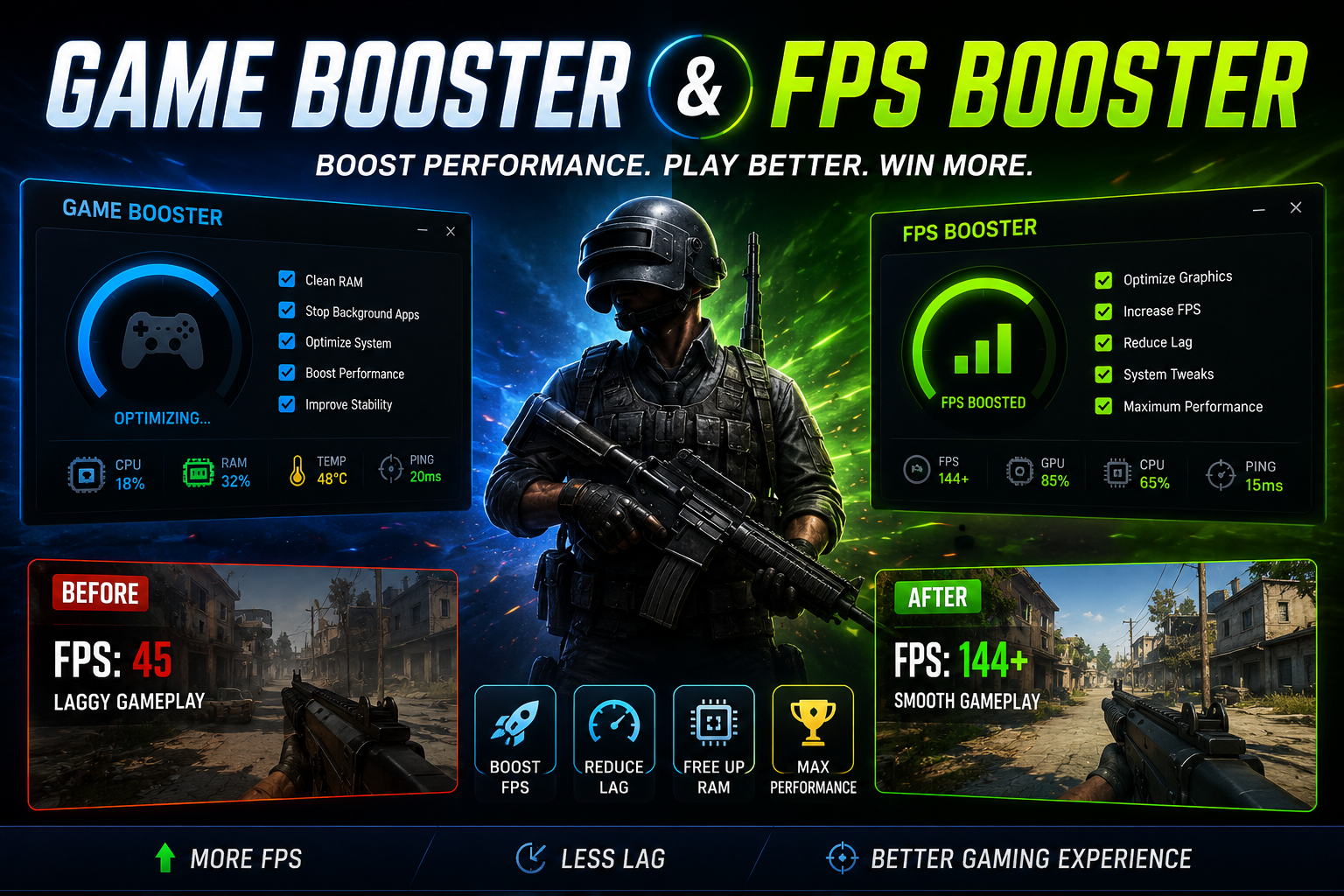
Every gamer dreams of playing their favorite titles without lag, frame drops, or slow loading times. However, as modern games become more demanding, many computers struggle to maintain consistent performance. Fortunately, you don’t always need expensive hardware upgrades. A reliable Game Booster combined with an effective FPS Booster can help unlock your PC’s full gaming potential.
These optimization tools are designed to reduce unnecessary system activity, improve hardware efficiency, and provide a smoother gaming experience. Whether you’re a casual player or an esports enthusiast, understanding how these tools work can help you enjoy better performance in every game.
Why Gaming Performance Matters
Gaming performance isn’t measured only by graphics quality. Smooth gameplay, quick response time, and stable frame rates are equally important. Even a powerful computer may experience slowdowns if unnecessary applications consume valuable resources in the background.
This is why many gamers use optimization software before launching their favorite games. By preparing the system for gaming, they can enjoy improved stability and higher frame rates.
What Does a Game Booster Do?
A Game Booster is designed to optimize your operating system before gaming begins. Instead of allowing Windows to run every background process, it temporarily disables unnecessary tasks and focuses your PC’s power on the active game.
Its primary objective is to reduce resource waste and maximize gaming efficiency.
Main Functions of a Game Booster
A quality Game Booster can:
- Stop unnecessary background applications
- Free unused RAM
- Optimize CPU performance
- Reduce startup processes
- Improve system responsiveness
- Clean temporary files
- Enable gaming mode automatically
These improvements help your computer dedicate more processing power to gaming instead of background activities.
What Makes an FPS Booster Different?
While both tools improve gaming performance, an FPS Booster specifically focuses on increasing frame rates.
FPS (Frames Per Second) determines how smoothly animations appear on your screen.
For example:
- 30 FPS provides acceptable gameplay.
- 60 FPS offers smooth performance.
- 120 FPS or above delivers an ultra-responsive gaming experience.
Higher FPS results in smoother movement, faster reactions, and better control during competitive matches.
Why Your FPS Becomes Low
Several factors may reduce gaming performance, including:
Background Software
Web browsers, update services, antivirus scans, and cloud applications continue running while you play, consuming CPU and RAM.
Old Drivers
Graphics card manufacturers frequently release new drivers that improve game optimization.
Using outdated drivers may reduce gaming performance.
Limited Available Memory
When RAM becomes full, Windows starts using storage as virtual memory, which is much slower.
High Graphics Settings
Ultra graphics settings require more GPU power.
Reducing certain visual effects often increases FPS significantly.
How a Game Booster Improves System Efficiency
A Game Booster works by making small but effective changes throughout your operating system.
Intelligent Resource Management
Instead of allowing dozens of applications to compete equally for CPU power, the software prioritizes gaming processes.
Temporary Process Suspension
Many background services are unnecessary while gaming.
Temporarily stopping them allows your processor to focus entirely on your game.
Better Memory Allocation
Unused memory is released automatically, allowing larger games to run more efficiently.
Reduced Startup Load
By disabling unnecessary startup programs, your PC boots faster and remains more responsive.
How an FPS Booster Enhances Gameplay
An FPS Booster uses several optimization techniques to improve frame rates.
These include:
- Optimizing graphics configuration
- Reducing CPU bottlenecks
- Improving memory utilization
- Lowering system latency
- Updating essential drivers
- Adjusting Windows performance settings
Instead of changing hardware, it ensures every available resource is used efficiently.
Tips for Maximizing Gaming Performance
Using a Game Booster and FPS Booster is only part of the optimization process.
Follow these additional recommendations:
Update Windows
Operating system updates often include stability improvements and performance enhancements.
Install Games on SSD
Solid State Drives reduce loading times and improve texture streaming compared to traditional hard drives.
Maintain Proper Cooling
Excessive heat causes processors and graphics cards to reduce their speed automatically.
Cleaning dust from your PC improves airflow and prevents overheating.
Close Heavy Applications
Streaming software, browsers, and editing programs should be closed before gaming.
Reduce Unnecessary Visual Effects
Disabling motion blur, lowering shadow quality, and reducing reflections often produce noticeable FPS improvements.
Who Should Use These Optimization Tools?
A Game Booster and FPS Booster are beneficial for nearly every gamer, especially those using:
- Older gaming computers
- Entry-level gaming laptops
- Mid-range desktop systems
- Limited RAM configurations
- Integrated graphics systems
Even newer computers benefit from reducing background activity.
Common Misunderstandings
Many people believe optimization software can magically transform an old computer into a high-end gaming machine.
This is not true.
Optimization tools maximize existing hardware performance but cannot replace physical upgrades like faster processors or more powerful graphics cards.
However, removing software bottlenecks often produces surprisingly noticeable improvements.
Choosing Reliable Optimization Software
When selecting a Game Booster, look for features such as:
- Automatic optimization
- One-click boost mode
- RAM cleaner
- CPU optimization
- Startup manager
- Driver update support
- Performance monitoring
- Easy restoration of original settings
Reliable software should improve performance without affecting system stability.
Final Thoughts
A Game Booster and FPS Booster offer a practical solution for gamers who want smoother gameplay without investing in costly hardware upgrades. By optimizing system resources, reducing background activity, and improving frame rate stability, these tools help your PC perform at its best.
Although no optimization software can replace modern gaming hardware, it can eliminate unnecessary performance limitations that prevent your system from reaching its full potential. When combined with updated drivers, regular maintenance, and sensible graphics settings, a Game Booster and FPS Booster can significantly improve your gaming experience.
Whether you’re competing in online multiplayer games or exploring visually demanding open worlds, optimizing your PC allows you to enjoy faster loading times, stable FPS, lower lag, and more responsive gameplay.