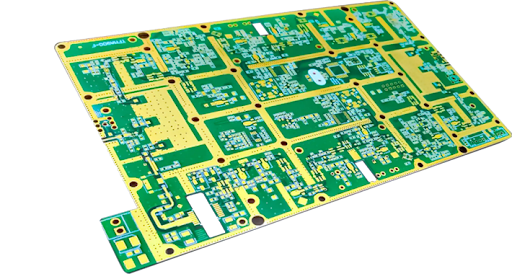
As electronic devices become faster, smaller, and more sophisticated, manufacturers need printed circuit boards that can handle demanding electrical requirements while supporting efficient production schedules. Two important considerations in modern PCB production are high frequency PCB manufacturing and Fast Turn PCB services. High-frequency boards are designed to maintain signal integrity at elevated frequencies, while fast-turn services help businesses move from design to finished boards in a shorter timeframe.
Understanding High Frequency PCB Manufacturing
High frequency PCB manufacturing focuses on producing circuit boards that can reliably transmit high-speed signals with minimal signal loss, interference, and distortion. These PCBs are commonly used in applications involving radio frequency (RF), wireless communication, radar, telecommunications, automotive electronics, and other advanced systems.
Unlike conventional circuit boards, high-frequency PCBs require careful control of materials, layer structures, impedance, dielectric properties, and manufacturing tolerances. Even small variations in board construction can affect signal performance, making precision an important part of the manufacturing process.
Materials Used for High Frequency PCBs
Material selection is one of the most important factors in high frequency PCB manufacturing. Standard FR-4 materials can be suitable for many electronic applications, but demanding high-frequency designs may require specialized laminates with controlled dielectric characteristics and low signal loss.
Manufacturers may select materials according to the operating frequency, thermal requirements, electrical performance, mechanical characteristics, and application environment. Choosing the right substrate can help maintain stable signal transmission and improve overall circuit reliability.
Why Signal Integrity Matters
At high frequencies, signals are more sensitive to factors such as impedance variations, electromagnetic interference, dielectric loss, and transmission-line effects. PCB layout therefore plays a major role in determining whether a circuit performs as intended.
Designers need to consider trace width, spacing, layer arrangement, grounding, via placement, and controlled impedance. During high frequency PCB manufacturing, these design requirements must be translated accurately into the physical board to reduce unwanted electrical effects.
What Is a Fast Turn PCB?
A Fast Turn PCB is a printed circuit board produced within a shorter manufacturing timeframe than a standard production order. Fast-turn PCB services are particularly useful for engineers, startups, product developers, and businesses that need prototypes or small production runs quickly.
Instead of waiting through an extended manufacturing schedule, customers can use accelerated production options to receive boards sooner. This can be especially valuable when a development team needs to test a circuit, identify design problems, or prepare a product for the next stage of development.
Benefits of Fast Turn PCB Manufacturing
The main advantage of a Fast Turn PCB service is reduced development time. Faster board production can help engineering teams complete testing and make design changes without unnecessary delays.
Fast-turn manufacturing can also support:
- Rapid prototyping
- Product development
- Design verification
- Engineering testing
- Small-batch production
- Quick design revisions
- Time-sensitive electronics projects
For companies operating in competitive markets, reducing the time between design completion and physical testing can make the overall development process more efficient.
Combining High Frequency Performance With Fast Production
Some electronics projects require both advanced electrical performance and quick manufacturing. In such cases, high frequency PCB manufacturing and Fast Turn PCB services can work together to support rapid development without overlooking technical requirements.
However, faster production should not mean compromising board quality. High-frequency designs still require accurate fabrication, appropriate materials, controlled impedance, reliable plating, and careful inspection. A capable manufacturer must balance production speed with the precision required by the application.
Important Manufacturing Considerations
Before ordering a high-frequency or fast-turn PCB, several technical factors should be evaluated. These include the number of layers, board dimensions, copper thickness, material type, minimum trace and spacing requirements, via structure, impedance specifications, and surface finish.
The manufacturing documentation should also be complete and accurate. Proper Gerber files, drill information, stack-up details, fabrication notes, and component information can help reduce unnecessary communication and production delays.
Quality Control in PCB Production
Quality control is essential for both high-frequency and fast-turn boards. Manufacturers should inspect boards for dimensional accuracy, solderability, surface defects, drilling quality, layer alignment, and other manufacturing issues.
For high-frequency applications, electrical testing and impedance verification can be particularly important. Thorough inspection helps identify manufacturing problems before boards reach the final assembly or testing stage.
Choosing the Right PCB Manufacturing Service
When selecting a manufacturer, businesses should look beyond production speed or price alone. A suitable supplier should have experience with the required PCB technology and be able to meet the project’s material, tolerance, testing, and delivery requirements.
For high-frequency projects, ask about experience with specialized materials and controlled-impedance fabrication. For Fast Turn PCB projects, confirm the expected production schedule and whether the manufacturer can maintain consistent quality under accelerated timelines.
Supporting Faster Electronics Development
The combination of advanced PCB fabrication and shorter production cycles can provide a valuable advantage for modern electronics development. Engineers can create prototypes faster, test their designs earlier, and make improvements based on real-world results.
As electronic products continue to demand higher frequencies and faster data transmission, manufacturers capable of providing reliable high frequency PCB manufacturing alongside efficient Fast Turn PCB production can help businesses move from concept to functional hardware more efficiently.
Conclusion
High frequency PCB manufacturing requires precision, appropriate materials, and careful attention to electrical and mechanical details. At the same time, Fast Turn PCB services can reduce production delays and help engineering teams accelerate prototyping and product development. By choosing a manufacturer that can combine speed with dependable fabrication and quality control, businesses can build reliable circuit boards while keeping their development schedules on track.