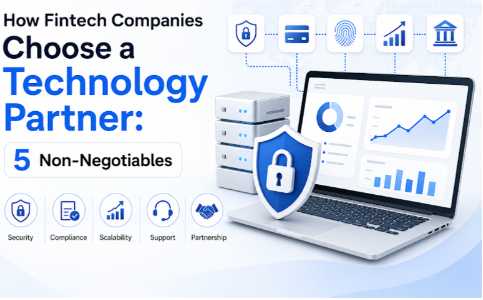
Choosing a technology partner is one of the highest-stakes decisions a fintech company makes. The wrong choice doesn’t just cost money — it can mean failed audits, security incidents, or a product that can’t scale past its first few thousand users. Whether you’re a startup building your first app or an established financial firm modernizing legacy systems, working with the right fintech development partner makes the difference between a product that scales and one that needs to be rebuilt within a year. Here are five things that should never be negotiable when picking one.
1. Security Built Into the Architecture, Not Added Later
Financial applications handle sensitive data — account details, transaction histories, personal identity information. A technology partner should treat security as a design principle from day one, not a checklist item before launch.
Ask potential partners how they handle encryption, secure API design, and authentication. If security only comes up when you bring it up, that’s a warning sign. The right partner will have already asked you about your regulatory environment before you had to ask them about security.
2. Real Experience with Financial Compliance
Fintech products don’t operate in a vacuum. Depending on your market and product type, you may need to work within frameworks like PCI DSS for payment handling, KYC requirements for user verification, or regional data protection laws.
A partner with genuine fintech experience will understand how compliance requirements shape technical decisions — from how data is stored to how transactions are logged and audited. This is different from general software experience. Ask for specifics: which compliance frameworks have they built for, and what did that actually involve in the codebase, not just in a sales deck.
3. Architecture That Scales With You
Many fintech products are built to handle their first thousand users, not their hundred-thousandth. A technology partner should design for growth from the start — meaning your data architecture, API structure, and infrastructure choices should be able to handle increased transaction volume, new markets, or new product lines without a costly rebuild.
This is worth probing during the selection process. Ask how they’ve approached scalability on past projects, and what would need to change if your user base grew tenfold in a year.
4. A Transparent, Structured Delivery Process
Vague timelines and unclear milestones are how fintech projects run over budget and past deadline. A serious technology partner will walk you through their development process before you sign anything — how requirements are gathered, how progress is tracked, how testing is handled, and how changes are communicated.
You should know, before the project starts, what a typical sprint or milestone looks like and how you’ll be kept informed. If a partner can’t explain this clearly upfront, it usually gets worse once the project is underway.
5. Support That Doesn’t End at Launch
Launch day is the beginning, not the end, of a fintech product’s lifecycle. Regulations change, security threats evolve, and user needs shift. Your technology partner should have a clear plan for post-launch support — bug fixes, security patching, feature updates, and monitoring.
Before committing, ask what post-launch support actually includes and what it costs. A partner who treats this as an afterthought is telling you something about how they’ll handle your product once it’s live.
The Bottom Line
Picking a technology partner for a fintech product is less about finding the cheapest option and more about finding a team that treats security, compliance, and scalability as fundamentals rather than extras. Firms like GMTA Software, which build fintech applications with compliance-ready architecture from the start, are the kind of partner worth evaluating closely — and the cost considerations involved in building a fintech app are worth understanding before you start comparing vendors.
Take the time to ask the right questions before signing a contract. The five non-negotiables above are a good starting point for any due diligence conversation.