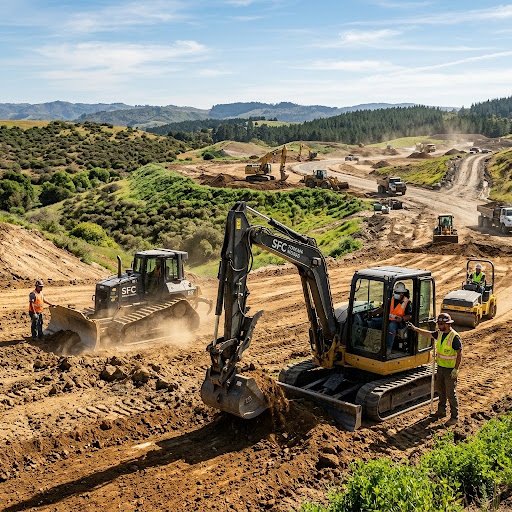
The ground beneath a project tells you everything. Poor preparation leads to cracked foundations, drainage nightmares, and costly repairs down the line. Exceptional terrain work, on the other hand, sets the stage for structures that stand strong for decades. That’s exactly what SFC Terrain Works delivers — precision, reliability, and craftsmanship at every stage of land preparation.
From residential lots to large-scale commercial developments, terrain work is one of the most critical phases of any construction project. Get it right, and everything built on top of it thrives. Get it wrong, and the consequences ripple through every phase that follows.
What Does Terrain Works Actually Involve?
Terrain works covers a broad range of services that transform raw or uneven land into a properly prepared surface ready for development. It’s not just about moving dirt — it’s about understanding how land behaves, how water flows, and how soil compacts under pressure.
Core terrain work services typically include:
- Land clearing: Removing trees, stumps, brush, and debris to expose a clean working surface
- Grading and leveling: Reshaping the land’s surface to achieve proper slope and drainage
- Excavation: Digging out earth for foundations, utilities, and underground structures
- Erosion control: Installing barriers, retaining walls, and drainage solutions to prevent soil loss
- Compaction: Pressing soil layers to improve load-bearing capacity
Each of these tasks requires skilled operators, the right heavy equipment, and a detailed understanding of site-specific conditions. Rushed or poorly executed terrain work creates instability that no amount of construction expertise can fully correct.
Why the Quality of Terrain Work Shapes Every Project Outcome
Consider this: a building’s foundation is only as stable as the ground it sits on. Engineers can design the most structurally sound slab imaginable, but if the subgrade beneath it hasn’t been properly graded and compacted, settlement and shifting will follow.
The same logic applies to landscaping, roadways, drainage systems, and outdoor recreation spaces. Proper grading determines where rainwater flows. Correct excavation depths ensure utilities are protected. Thoughtful site planning prevents erosion from undoing weeks of hard work.
Terrain work done right means fewer change orders, fewer delays, and fewer costly surprises after construction wraps up. For property developers and homeowners alike, investing in quality terrain work upfront is one of the smartest decisions any project can make.
The Equipment and Expertise Behind Quality Results
Modern terrain work relies on a combination of heavy machinery and precise, experienced judgment. Bulldozers, excavators, motor graders, and compactors are standard tools — but knowing how and when to deploy each one requires real expertise.
Soil conditions vary dramatically from site to site. Clay-heavy soils behave very differently from sandy or loamy ground. Rocky terrain demands a different approach than soft, expansive soils prone to shifting. Experienced terrain contractors read the land before a single machine breaks ground, assessing drainage patterns, soil composition, and structural load requirements.
Technology has also transformed how terrain work is executed. GPS-guided grading systems allow operators to achieve precise elevation targets within centimeters, eliminating guesswork and reducing material waste. Drone surveys provide accurate topographic data before work begins, enabling better planning and fewer surprises mid-project.
The result is terrain work that’s faster, more accurate, and built to support whatever comes next.
Residential vs. Commercial Terrain Work: Key Differences
Not all terrain projects are created equal. Residential terrain work typically involves smaller-scale grading, landscaping preparation, and drainage correction — critical for homeowners looking to build a new home, add a pool, or improve outdoor drainage around an existing structure.
Commercial terrain work, by contrast, operates on a much larger scale. Multi-acre site preparation for warehouses, retail centers, industrial facilities, and subdivision developments requires coordinated teams, larger equipment fleets, and detailed project management to stay on schedule.
Both residential and commercial clients share the same core need: ground that’s ready to support the next phase of their vision. The approach differs, but the commitment to quality should not.
Signs Your Site Needs Professional Terrain Work
Not every terrain challenge is obvious. Some of the most serious site problems are subtle — at least until construction is underway and the damage becomes expensive to fix. Here are key indicators that professional terrain works services are needed before breaking ground:
- Standing water after rain: Poor natural drainage suggests the land slopes toward structures rather than away from them
- Uneven or rolling ground: Irregular terrain creates unstable build sites and makes grading essential
- Visible erosion channels: Ruts or gullies indicate that topsoil is being lost, which weakens the subgrade
- Previous construction fill: Old fill material may not be compacted to current standards and requires assessment
- Tree and stump removal: Organic material left underground decomposes over time, causing voids and settlement
Addressing these issues before construction begins is always more cost-effective than correcting them afterward.
What Sets a Great Terrain Works Service Apart
The terrain works industry has no shortage of contractors, but quality varies widely. A few key factors separate genuinely exceptional service from merely adequate work:
Site assessment depth: Top-tier providers don’t just show up and start grading. They conduct thorough assessments of soil type, drainage patterns, and load requirements before a plan is developed.
Project communication: The best companies keep clients informed at every stage — from initial grading through final compaction testing — so there are no surprises at project completion.
Equipment quality and maintenance: Well-maintained machinery performs more accurately and is less likely to cause costly delays mid-project.
Environmental awareness: Responsible terrain work minimizes environmental disruption, manages sediment runoff, and complies with local erosion control regulations.
Timeline reliability: Terrain work sets the pace for every phase that follows. Delays here push back the entire construction schedule.
Building Something That Lasts Starts Here
Every impressive structure, well-drained yard, and smooth commercial site began with the same first step — careful, professional terrain preparation. The land itself had to be understood, shaped, and stabilized before anything else could move forward.
SFC Terrain Works brings together the skilled workforce, advanced equipment, and site expertise that property owners and developers need to set their projects on solid footing from day one — delivering terrain solutions that protect long-term investments and support construction success at every scale. Whether the scope is a single residential lot or a sprawling commercial development, the commitment to precision and quality remains consistent throughout.
The next successful project begins well before the first wall goes up. It begins with the ground.