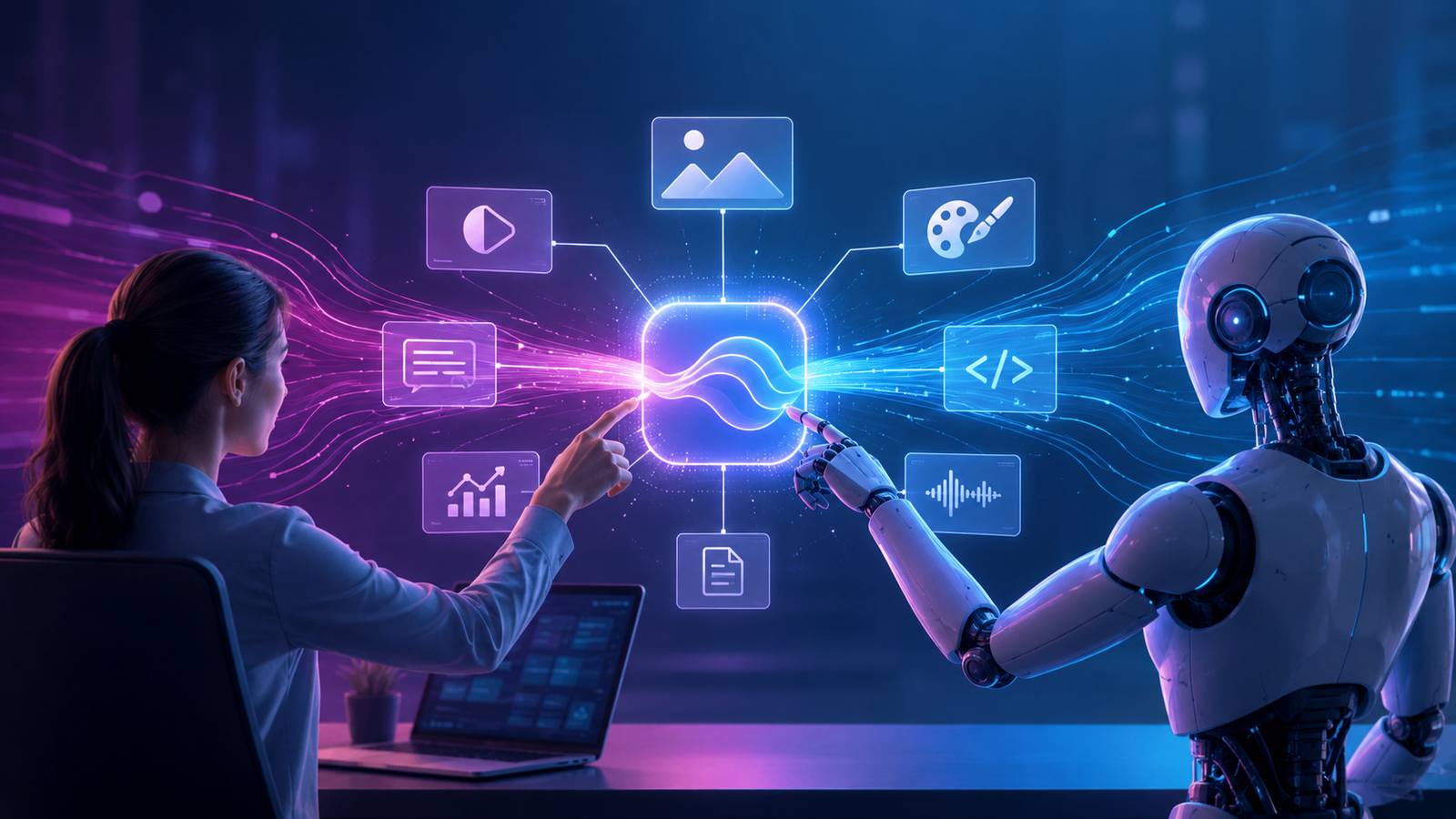
In the past, it was believed that to get good-quality AI results, you had to write detailed prompts. But a lot of prompt engineering doesn’t necessarily result in better performance; it can actually decrease it. Understanding natural requests, shared project context and business goals, modern intelligent workflows make creative production simple. This allows us to finish creative and development work sooner with less wasted work between projects.
Why Complex Prompt Writing Slows Productivity
Complex prompting requires technical expertise most professionals aren’t trained for. Each project involves a lot of testing of words until it becomes acceptable. Some minor changes in the text can result in vastly different computer-generated results; consistency is challenging. Time is spent not working, but giving instructions. Often, there are too many prompt revisions, which slow down the creative process and delay decision-making. The prompts may be created inconsistently by team members for the same goals. As projects grow, it becomes challenging to keep things long. Using old prompts is likely to produce different results since the needs of projects change over time. At some point, creative professionals start expending a lot of effort explaining what they do rather than doing it. Intelligent systems that can grasp goals naturally, rather than relying on meticulously crafted prompt architectures, are more advantageous for businesses.
How Converge AI Removes Prompt Complexity
More and more modern AI platforms are about intent rather than providing precise instructions. Converge AI goes in this direction and applies intelligent agents that understand natural language and take into account the goals of the project. By having the same context, projects can stay connected rather than working on each request separately. Previously built assets, workflows and organizational knowledge turn into reusable resources, rather than outputs. The platform is flexible to business goals, and less reliant on lengthy prompt engineering. Even simplified requests generate valuable content because intelligent workflows are able to see the relationship between design, marketing, development and production tasks. This saves time and effort in making repeated changes during various creative activities. Rather than continually tweaking instructions, professionals can concentrate on ideas, planning, collaboration, and measurable business results.
Framia Pro and Prompt-Free Creative Production
Advanced prompting is no longer needed, making creative production much easier. Framia Pro makes professional visual generation possible without the need for complicated chains of instructions. Descriptions are all that is needed for creating images, and built-in editing tools make it easy to make further refinements. Smart creative guidance for cinematic videos: storyboards, scenes, voiceovers and supporting media are managed with guided workflows. Visual elements, text, background and audio are also kept in a single intelligent workspace, which makes editing efficient. Creative assets evolve within an integrated editing canvas, rather than having to switch between applications. By enabling connected development workflows in addition to creative production, Enter Pro empowers companies to handle larger digital projects without adding unnecessary complexity.
Simplifying Application Development with Enter Pro
Typically, application development required technical roadmap planning, coding skills, and several software environments before any significant progress was made. Today’s AI-driven development process flips that on its head by grasping simple project descriptions rather than requesting technical specifications as a first step. Business goals, targeted users, workflows and desired features give sufficient guidance for intelligent planning. Applications generated are made editable using visual interfaces from the initial application, eliminating the need to rewrite prompts during revisions. The flexibility of layouts, branding, workflows and integrations is maintained throughout the development process. Functionality can be further improved while keeping previous project context. This workflow can reduce development cycles as changes are made in the visual mode rather than repeated rebuilds of instructions. Rapid iterations enable projects to grow organically, all while staying aligned with the shifting needs of the organization.
What You Can Create Without Prompt Engineering
Modern intelligent platforms support many creative and operational tasks through simplified interaction instead of complicated instructions.
-
Business Applications: Generate applications using simple project descriptions and refine interfaces visually instead of rewriting prompts.
-
Marketing Videos: Produce promotional videos through guided AI directors while editing scenes using natural instructions.
-
Brand Visuals: Create consistent promotional materials quickly while maintaining visual branding across multiple campaigns automatically.
-
AI Images: Generate professional graphics from simple descriptions and enhance visuals using integrated editing capabilities.
-
Games and Assets: Build interactive experiences naturally while generating supporting assets within unified workflows using Combos.
-
Workflow Automations: Connect business processes efficiently while reducing repetitive manual operations across everyday activities.
Intelligent Workspaces That Understand Context
Context-aware workspaces enhance productivity, remembering information among projects rather than on a one-off basis. Teams can leverage successful workflows, creative materials, and design patterns, avoiding the need for lengthy explanations of these items because they are shared knowledge. As contextual intelligence is consistent, output quality is improved as decisions made in the past are still available during the work in progress. Reusable knowledge also minimizes redundant efforts across departments with the same goals. Project information stays connected rather than spread out in disparate applications, making collaboration more fluid. With reduced repetition, professionals have more time to enhance ideas and less time spent on creating the same instructions. The preservation of context is important for long-term efficiency and to enable organizations to keep consistency in growing creative and operational workloads.
Combining Creation, Editing, and Collaboration
Design, editing, collaboration and production in a single environment boost creative workflow. Designers, marketers, developers and content creators can tweak projects without having to move files between disparate applications. Framia Pro enhances this process with smart editing features, including image editing, video adjustments, timeline control, layer editing, captioning, and audio sync. Additionally, reviews are accelerated by the fact that they work on project versions rather than multiple exported versions. Revision cycles are even shorter, because updates show up instantly across linked workspaces. By streamlining communication, unified collaboration ensures creative consistency across the entire production process, from conception to final delivery.
Building More in Less Time with AI-Native Workflows
AI-native workflows eliminate the need for unnecessary complexity by bringing together development, creative production, collaboration, and automation within single environments. No longer does any organization rely on separate subscriptions or stand-alone software for each stage of production. Integrated intelligence makes operations easier by enabling reusable assets, contextual understanding, and coordinated workflows to work together. The professionals can focus more on planning, innovation and strategic execution and less on repetitive administrative work. It allows for more agility in execution as well – no higher operational costs if business priorities change. Systems that are connected across the landscape help to maintain consistency, minimize redundant work across growing projects and multidisciplinary teams, and make scalable workflows more manageable.
Conclusion
In today’s production world, prompt-free creative workflows streamline the process by eliminating the need for unnecessary time-consuming steps during development, design, collaboration, and content creation. With natural interaction, professionals can concentrate on ideas rather than repeatedly working on lengthy instructions. Context-aware intelligence enhances consistency and facilitates efficient teamwork and reusable workflows. In the ever-changing landscape of AI-native environments, simplified interaction is key to achieving faster execution, seamless collaboration, and enhanced productivity in various creative and business endeavors.