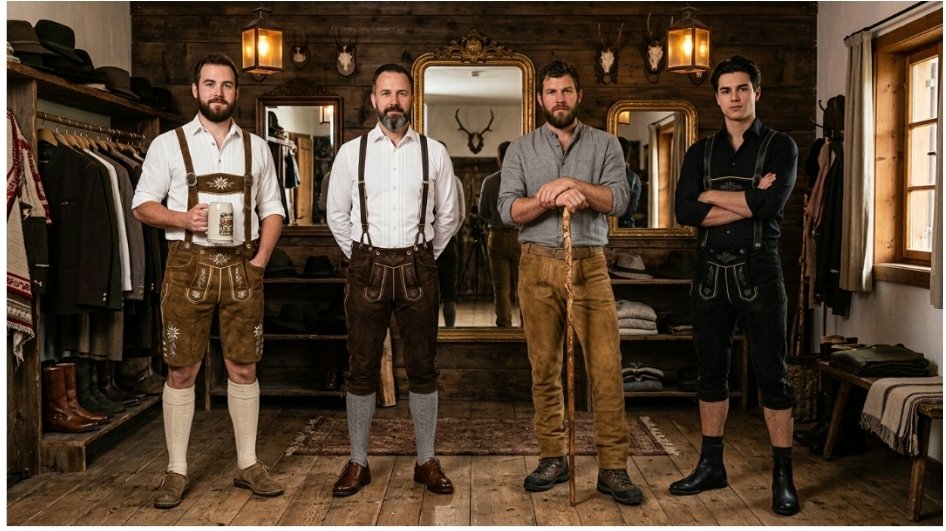
Lederhosen” is one word covering several distinct garments — and choosing well starts with knowing the family. The tradition produced multiple cuts for multiple purposes: the above-knee short that Oktoberfest made famous, the knee-length kniebund (widely known as bundhosen) that formal occasions favor, and the full-length version built for Alpine cold. Around those cuts run the style variations — classic browns, statement black lederhosen, vintage character pieces — that set register and personality. This guide maps the complete family: every cut, every major style direction, who each serves best, and how to choose the type your occasions actually call for.
The Three Cuts: Length Defines the Type
The Classic Short (Kurze Lederhosen)
The above-knee short is the garment’s most famous form — the festival default, the Oktoberfest icon, and the correct first pair for most buyers. The short cut delivers maximum movement freedom for bench-dancing and long festival days, displays the full traditional sock zone below it, and carries the classic silhouette every tent photograph confirms. Its register runs casual-to-festival: perfect for beer tents, folk festivals and warm-weather events, slightly informal for ceremonies.
Kniebund and Bundhosen: The Knee-Length Middle
The knee-length cut — kniebund lederhosen, widely listed as bundhosen — closes just below the knee with a buttoned or buckled cuff, creating a longer, more formal line. Bundhosen are the tradition’s dress trousers: the choice for weddings, church occasions, formal Trachten events and cooler weather, worn by many Bavarian men as their primary pair precisely because the register range runs wider than the short’s. The cut pairs naturally with loden jackets and finer shirts, and its cuff meets the sock cleanly for the seamless leg line the formal register prizes.
Long Lederhosen: The Full-Length Original
Long lederhosen — full-length leather trousers, sometimes searched as long lederhosen pants — are the family’s oldest working form, built for Alpine winters and outdoor labor before the shorter cuts rose to festival fame. Today the long cut serves cold-climate events, hunting and outdoor traditions, and wearers who want the leather’s durability in an everyday trouser silhouette. It is the rarest of the three at festivals and the most practical of the three in genuine cold.
How Each Cut Fits and Wears Differently
Length changes more than looks — each cut carries its own fit behavior worth knowing before choosing. The classic short fits closest and moves most: fitted seat, free thigh, and the full break-in molding concentrated where movement happens; it is the cut that becomes most personally shaped over time. The kniebund adds the cuff variable: the below-knee closure should sit snug without binding when standing and seated both, and the cut’s longer panels distribute the leather’s structure for the slightly more tailored drape the formal register wants. The long cut wears most like a conventional trouser while keeping leather’s character — the most break-in patience up front, the most everyday versatility after.
Sizing method stays identical across all three — natural waist and seat by measurement against the maker’s chart — with one cut-specific addition each: confirm inseam intent on shorts (hem at or just above the knee), cuff circumference on kniebund, and full inseam length on long lederhosen. The fit philosophy never changes: snug now, molded later, with the lacing bridging the difference.
The Style Directions: Color and Character
The Classic Browns
The tradition’s heartland runs tan through dark chocolate — natural suede tones that pair with everything, age beautifully, and read correct at every occasion. Medium brown remains the universal first-pair recommendation across all three cuts.
Black Lederhosen
Black lederhosen are the statement direction: sleek, contemporary, and increasingly popular for evening events and modern festival style. Black pairs formalize instantly — especially in the kniebund cut — and give the outfit a sharper urban edge, at the cost of the classic brown’s anything-goes pairing range. The style suits second-pair buyers and evening-focused wardrobes best.
Vintage Lederhosen Character
Vintage lederhosen — whether true older pairs or new pairs finished with aged character — carry the tradition’s deepest register: darkened tones, burnished wear patterns, and the patina that only years (real or expertly applied) produce. Genuine vintage pairs reward careful condition-checking (leather suppleness, seam integrity, working hardware); vintage-styled new pairs deliver the character with modern sizing and structure. Either way, the aged direction reads as connoisseur’s choice — the pair that looks like it has stories.
Trachten Lederhosen: The Traditional Standard Across All Types
Whatever the cut or color, the term trachten lederhosen marks the standard that matters: garments built within the Tracht tradition — genuine hide, stitched Alpine embroidery, working button-front construction, proper suspender buttons, and the regional detailing the costume tier only imitates. Every type in this guide exists in both a trachten-grade version and a costume imitation, and the authentication rules apply identically across the family: named leather, dimensional embroidery, measurement sizing, honest pricing.
The practical rule: choose the cut for your occasions, the color for your register — and the trachten standard for everything, always.
Choosing Your Type: The Decision Framework
Three questions sort the family for any buyer. What are your primary occasions? Festivals and beer tents point to the classic short; weddings and formal events to bundhosen; cold climates and outdoor wear to the long cut. What register do you want? Classic brown for universal correctness, black for evening statement, vintage character for heritage depth. And is this your first pair or your second? First pairs are best served by the medium-brown classic short (or bundhosen where formality dominates the calendar); second pairs are where black, vintage and alternate cuts earn their place.
Most complete wardrobes eventually hold two: a festival short and a formal bundhosen — the pairing that covers the entire traditional calendar between them.
Building a Two-Pair Wardrobe Across the Types
The complete traditional wardrobe rarely needs the whole family — it needs the right two members. The proven pairing: a medium-brown classic short as the festival workhorse, plus a darker kniebund as the formal answer — between them covering every beer tent, wedding, church occasion and ceremony the calendar can produce, sharing the same shirts, socks and suspenders throughout. Cold-climate wearers substitute or add the long cut where winters demand it; evening-focused wardrobes make the second pair black rather than dark brown.
The buying order matters more than the buying speed: first pair matched to your dominant occasions (short for festival-centered calendars, kniebund where formality leads), worn a full season, then the second pair chosen from experience rather than guesswork. Accessories transfer completely between the two — one sock rotation, one suspender set, one pair of shoes serving both — which is what makes the two-pair system so efficient: the second garment costs only itself, arrives into a complete outfit ecosystem, and doubles the wardrobe’s range the day it does.
Embroidery and Detailing Across the Types
The decoration vocabulary travels the whole family, adjusting register as it goes. On classic shorts, embroidery runs boldest: full Alpine motifs — Edelweiss, oak leaves, stags — across the front flap and side seams in the traditional green-and-cream threadwork, matched by decorated suspender crossbars. Kniebund pairs typically refine the same vocabulary: finer stitching, more tonal palettes, detailing that reads formal at conversation distance — with the cuff buttons adding their own small ornament point. Long pairs and working-register cuts run quietest, often near-plain, letting the leather carry the character. The style directions modify the vocabulary too: black pairs favor tonal black-on-black or silver-toned stitching for the contemporary read; vintage-character pairs carry aged, muted threadwork that matches their patina. Across every type the quality rule is identical and non-negotiable: embroidery is stitched thread with physical dimension, never printed — the single detail that authenticates any member of the family fastest, whatever its cut, color or register.
Frequently Asked Questions
What is the difference between lederhosen and bundhosen?
Length and register: classic lederhosen are above-knee shorts for festival wear; bundhosen (kniebund) close just below the knee and serve as the tradition’s more formal trouser.
Are long lederhosen traditional?
Fully — the full-length cut is the family’s oldest working form, built for Alpine cold, and remains the practical choice for winter events and outdoor wear.
Are black lederhosen acceptable at Oktoberfest?
Yes — black is an established modern style direction, strongest in evening settings, though classic brown remains the universal default.
What does “trachten lederhosen” mean?
Lederhosen built to the traditional Tracht standard: genuine leather, stitched embroidery and working construction — the quality tier across every cut and color.
Which type should a first-time buyer choose?
The medium-brown classic short for festival-centered wardrobes; bundhosen where formal occasions dominate. Black, vintage and long cuts shine as second pairs.
Do all lederhosen types use the same sizing?
Yes — natural waist and seat by measurement across every cut, with one addition each: hem intent on shorts, cuff fit on kniebund, inseam on long pairs.
What two lederhosen types make the best wardrobe?
A medium-brown festival short plus a darker formal kniebund — together covering the full traditional calendar while sharing every accessory.
The Family, Mapped
The lederhosen family resolves cleanly once the map is known: three cuts (short for festivals, bundhosen for formality, long for cold), three style directions (classic brown, black statement, vintage character), and one standard — trachten-grade construction — running through everything worth buying. Match cut to occasion, color to register, and standard to always, and the type you choose will be the one the tradition would have chosen for you.