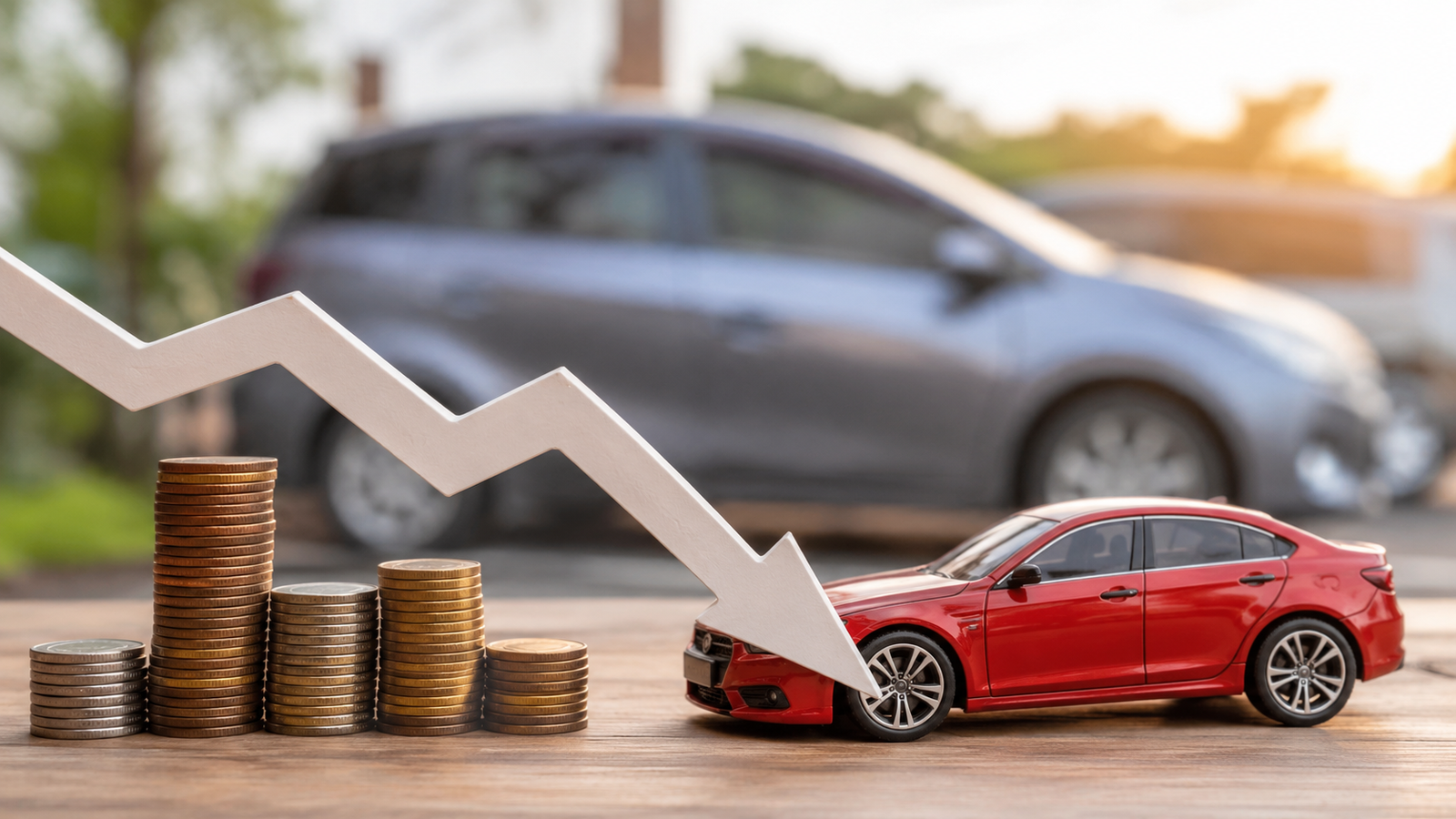
That treatment is wrong, and it costs households real money every year that nobody bothers to track.
A vehicle depreciates continuously, and the rate of that depreciation is directly affected by decisions owners make or skip in the first few years of ownership.
Depreciation Is Not a Fixed Cost
Standard depreciation curves assume average wear, average mileage, and average cosmetic condition at resale or trade-in time.
Owners who protect the vehicle proactively often outperform the curve, holding more resale value than the standard depreciation tables predict for their mileage and age.
That gap between the two outcomes is a real, measurable dollar amount, even though most household budgets never isolate it as its own line item.
The Asymmetry Between Prevention and Repair Cost
A protective accessory purchased at the time of ownership typically costs a few hundred dollars, a fixed and known amount.
The damage it prevents, whether from hail, sun exposure, road debris, or cargo shifting in transit, often costs several times that amount to repair later.
This is a classic asymmetric bet, familiar to anyone who has ever compared an insurance premium against the cost of an uninsured loss.
Most owners never run this comparison formally, even though the numbers usually favor the small, upfront purchase over the larger, uncertain repair bill later.
That kind of asymmetric math is why some owners lean toward a well-reviewed option instead of reinventing the research every time. For truck bed protection, that often means owners comparing choices settle on Proven Ground’s cover line.
Comparing Options Without Overpaying
Not every protective accessory needs to be the most expensive option on the market to deliver meaningful value against depreciation.
Premium hard-shell covers sit at one end of the spectrum, offering maximum rigidity and security at a price point that can rival a set of aftermarket wheels.
Basic soft covers sit at the other end, trading some durability for a lower cost of entry that appeals to buyers watching every dollar of the purchase.
Neither extreme fits every household budget, which is exactly why the middle tier of the market keeps growing year over year.
The goal isn’t buying the most expensive accessory available. It’s closing the gap between what the vehicle is worth protected and what it’s worth neglected, at the lowest reasonable cost.
Reviewers comparing budget and premium tiers often steer buyers toward the middle rather than either extreme option. A low-profile bed cover frequently delivers most of the protection benefit at a lower price point than premium hard-shell alternatives. That middle ground tends to satisfy budget-conscious buyers without sacrificing meaningful protection.
Price alone rarely tells the full story either, since a cheaper accessory that fails within a year ends up costing more than a mid-tier option that lasts a decade.
Building Protection Into the Purchase Decision
Financing a vehicle over five or six years means the buyer is already committing to a long holding period before trade-in.
That holding period is exactly when small, preventable damage accumulates fastest, since most owners delay protective purchases until after something already goes wrong.
Treating protection as part of the initial purchase decision, rather than a reactive expense, changes the entire cost trajectory of ownership from day one.
Lenders and financial advisors rarely bring this up during the financing conversation, which leaves the decision entirely up to the buyer to research on their own.
A short conversation at the dealership, or a quick comparison during the first weekend of ownership, is usually enough to make an informed choice before any damage ever occurs.
Waiting past that window doesn’t just risk damage. It also means the accessory spends less of the ownership period actually protecting the vehicle’s value.
What the Data on Trade-In Value Shows
Dealers appraising trade-ins weigh cosmetic condition heavily, often more heavily than owners expect going into the appraisal process.
A bed or cargo area showing wear, rust, or sun damage signals neglect to an appraiser, regardless of how well the engine and transmission were maintained.
That signal translates directly into a lower offer, frequently by hundreds of dollars, compared to a comparable vehicle in better cosmetic condition.
Private-party buyers apply the same scrutiny, sometimes even more critically, since they’re inspecting the vehicle without a dealership’s standardized appraisal checklist to guide them.
Photos posted in online marketplace listings make this scrutiny even more visible, since a damaged bed shows up clearly before a buyer ever schedules an in-person look.
Time Cost Deserves a Line Item Too
Repair estimates, insurance claims, and lost use of a vehicle during repairs all consume time that rarely gets counted in a household budget.
That missing line item understates the true cost of reactive repair versus proactive protection by a meaningful margin in most real cases.
Factoring in time cost alongside dollar cost makes the case for early protection even stronger than a simple price comparison suggests on its own.
A single afternoon spent researching and installing a protective accessory is a small trade against the hours lost to a claims process that can stretch across weeks.
That trade-off rarely gets discussed in personal finance advice, even though it applies to nearly every household that owns a vehicle used for hauling or work.
What This Means Going Forward
Vehicle ownership costs will keep climbing as repair labor, parts, and insurance premiums rise faster than general inflation in most regions.
Households that build protective spending into the purchase decision, rather than treating it as an afterthought, will increasingly outperform the standard depreciation curve.
That gap is likely to widen over the next several years, making early protection decisions more financially consequential than they’ve historically been treated.
The math favors acting early, and that math is only going to matter more as ownership costs continue climbing across the board.