A plant’s underground tissues often reveal a different side of its biology than its leaves, flowers, or branches. Root bark develops within soil, responds to environmental conditions, and changes structurally as the plant matures. Once separated, dried, and processed, those biological characteristics remain reflected in the material’s physical appearance.
The term Wholesale Mimosa Root Bark is commonly used when referring to larger quantities of root-bark material associated with Mimosa tenuiflora. Its botanical history, natural distribution, root structure, and post-harvest handling all provide useful context for understanding how this plant material can vary in appearance and physical condition.
Rather than viewing wholesale botanical material as a standardized manufactured product, it is more accurate to consider the biological and physical factors that influence its condition from plant growth through storage.
Meet the Plant: Mimosa Tenuiflora
Mimosa tenuiflora is a woody flowering species within the Fabaceae family. It belongs to the Mimosa genus, which contains numerous species with different characteristics and geographical distributions.
Depending on its surroundings, the plant can develop into a shrub or small tree. Its foliage consists of compound leaves containing many small leaflets. Thorny branches, flowers, and seed-bearing structures provide additional characteristics useful for identifying living specimens.
These features become particularly important when discussing botanical authenticity. Once a plant is reduced to root bark, many of the characteristics normally used for identification are no longer available.
How the Historical Name Fits In
The name Mimosa hostilis continues to appear frequently in botanical discussions, although Mimosa tenuiflora is widely used in modern references.
Scientific nomenclature can change as taxonomic research develops. Older books, academic records, ethnobotanical publications, and websites may preserve earlier names long after newer terminology becomes established.
For researchers, understanding the connection between Mimosa hostilis and Mimosa tenuiflora makes it easier to compare information from different sources without treating the names as automatically representing separate plants.
Root Bark Through the Lens of Plant Anatomy
Roots are more than underground anchors. They are living organs involved in water acquisition, mineral uptake, structural support, and interaction with soil environments.
As a woody root develops, its tissues undergo changes associated with increasing diameter and age. Protective outer layers develop around the underlying tissues.
The resulting bark can show differences according to the maturity and location of the root.
Factors such as soil pressure, drainage, moisture availability, temperature, and microbial activity can also influence root development. This helps explain why bark collected from different portions of a root system may not have identical physical characteristics.
Why Natural Materials Resist Perfect Uniformity
Manufactured powders can often be produced within tightly controlled specifications. Naturally derived plant materials are different.
Their characteristics originate from living organisms exposed to changing environmental conditions.
Variation may result from:
- Differences in plant age
- Root diameter and maturity
- Growing environment
- Soil composition
- Seasonal rainfall
- Temperature
- Drying conditions
- Mechanical processing
- Storage history
Consequently, a larger quantity of root bark can contain pieces or particles with slightly different appearances while still being associated with the same species.
From Underground Tissue to Dried Material
Fresh roots contain considerable water and have a flexible biological structure. After harvesting, drying removes much of that moisture and produces a substantial physical transformation.
The dried material becomes more rigid and generally more brittle. Its weight is reduced, while surface features may become more pronounced.
Drying is not simply a matter of removing water. Environmental conditions during this stage can influence the resulting material.
Air movement, temperature, humidity, and drying duration may all contribute to differences in texture and appearance.
Mechanical Processing and Structural Loss
The physical form of root bark changes progressively as it is processed.
Large pieces can preserve irregular contours, fibers, layers, and differences in thickness. Cutting and fragmentation reduce these features. Further grinding produces increasingly small particles.
A simple representation is:
Root bark → dried sections → cut pieces → fragments → coarse particles → fine powder
The plant species does not change during this process. What changes is the amount of recognizable structure remaining in the material.
This distinction is important because botanical identity and physical form are two separate concepts.
What Particle Size Tells Us
Particle size can provide information about how extensively a botanical material has been processed.
Larger particles generally retain more recognizable fibers and structural features. Fine particles have a much more uniform visual appearance because the original bark morphology has been broken down.
Particle size also changes the relationship between mass and surface area.
When one large piece is divided into many small particles, the combined exposed surface becomes much greater. This can influence how the material interacts with surrounding air, particularly under humid conditions.
Understanding Color Without Overinterpreting It
Color is an obvious feature of dried root bark, but it should be interpreted cautiously.
Natural botanical material may display different earthy or brown shades. Such differences can arise from plant maturity, growing conditions, drying, processing, and storage.
Particle size can also influence perceived color because finely divided material reflects light differently from larger pieces.
Therefore, visual color can be useful for description but should not be treated as a standalone method for determining species identity or botanical history.
The Importance of Geographic Context
Mimosa tenuiflora has a notable association with northeastern Brazil and occurs across other parts of Latin America.
Its natural distribution includes regions characterized by seasonal variations in rainfall and periods of dry weather.
Plant development responds to these environmental conditions. Soil type, moisture availability, sunlight, temperature, and drainage can all affect growth.
Geographical information therefore provides useful context when studying naturally sourced root material. Two samples from different environments may show physical differences without representing different species.
What Wholesale Quantities Actually Indicate
The word “wholesale” primarily describes scale.
It indicates that a relatively large amount of material is being considered, handled, documented, or distributed. It does not represent a separate botanical category.
For example, a large quantity can contain root material from different sections, plants of varying maturity, or material that has undergone different degrees of mechanical processing.
The greater the quantity, the more opportunities there may be for naturally occurring variation to become visible.
Handling Considerations for Larger Quantities
Larger amounts of dried botanical material require organized handling because environmental exposure can affect the material over time.
Basic considerations include maintaining clear identification, limiting unnecessary exposure to moisture, protecting the material from contaminants, and keeping appropriate records.
Useful documentation may identify:
- Scientific name
- Historical name
- Plant part
- Geographic source
- Physical form
- Quantity
- Processing date
- Storage conditions
Good documentation helps maintain continuity between the original botanical source and the material being handled later.
Humidity and the Behavior of Dried Root Material
Dried plant material does not become completely isolated from its environment.
Humidity can interact with dry botanical tissues, and finely processed particles are particularly exposed because of their high surface area.
Under unsuitable conditions, moisture can contribute to changes such as clumping, altered texture, or persistent dampness.
Long-term exposure to unfavorable humidity can also increase the risk of microbial deterioration.
For general preservation, dried botanical material should be maintained in a clean, dry environment with stable conditions.
Protecting Material During Storage
Storage conditions influence how dried root bark remains over time.
Important environmental factors include:
Relative Humidity
Excessive moisture can affect texture and physical stability.
Temperature
High temperatures can place additional stress on dried botanical materials.
Light
Prolonged direct sunlight can contribute to changes in some plant materials.
Contamination
Dust, insects, and foreign substances can affect stored botanical material.
Container Condition
Clean, appropriate containment helps reduce unnecessary environmental exposure.
These considerations become more significant as the quantity of material increases.
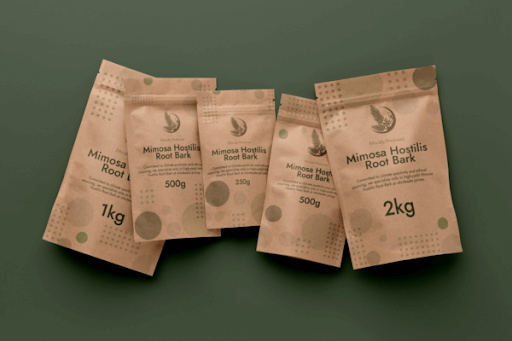
Packaging as Part of Material Handling
Packaging is not merely an administrative detail. It can influence the environment surrounding the botanical material.
During handling and transportation, appropriate containment can help reduce exposure to moisture, dust, physical abrasion, and external contaminants.
Labels are equally useful because similar-looking plant materials can become difficult to distinguish when stored together.
A clear label can include the scientific name, historical name, plant part, physical form, quantity, and date of storage.
Understanding Online Terminology
Online resources often use a combination of scientific names, historical names, common phrases, and commercial terminology.
The website name mimosa hostilis shop, for example, incorporates the historical botanical name Mimosa hostilis.
Such terminology can help explain how the species is represented online, but a website name should not be confused with scientific evidence.
When researching botanical material, greater attention should be given to factual details such as species terminology, plant part, source region, processing method, and documentation.
Why Root Bark Becomes Harder to Identify After Processing
Botanical identification depends heavily on morphology.
A living Mimosa tenuiflora specimen can be evaluated through numerous characteristics, including:
- Leaf structure
- Branch arrangement
- Thorn morphology
- Flowers
- Seed pods
- Bark characteristics
- Growth habit
- Habitat
Root bark contains only some of these features.
After fragmentation, even more information is lost. Fine powder contains very little recognizable morphology.
This means visual inspection becomes increasingly limited as processing becomes more extensive. Description and identification should therefore be treated as separate tasks.
Traceability in Botanical Handling
Traceability provides a link between a plant material and its recorded history.
For larger quantities, useful records may include the botanical identity, historical terminology, plant part, source region, processing form, quantity, and storage conditions.
This information can help distinguish one material from another and makes later review more straightforward.
Using both Mimosa tenuiflora and Mimosa hostilis in appropriate records can also assist with comparisons between modern and historical sources.
Natural Differences Versus Deterioration
A knowledgeable assessment should distinguish normal botanical variation from environmental damage.
Expected variation can include differences in:
- Brown coloration
- Fiber content
- Thickness
- Density
- Particle dimensions
- Surface texture
More concerning signs include visible fungal growth, unexplained dampness, insect contamination, or persistent abnormal odors.
This distinction matters because natural variation is inherent to plant material, whereas deterioration results from unfavorable conditions or contamination.
Ethnobotanical and Historical Context
Mimosa tenuiflora has been documented in ethnobotanical literature concerning relationships between plants and human communities.
Ethnobotanical studies can preserve information about traditional plant knowledge, local vegetation, historical terminology, and cultural relationships with plant species.
However, historical plant records should be interpreted within their original context. Ethnobotanical documentation does not automatically establish modern scientific conclusions about safety, effectiveness, or contemporary applications.
A Comparison of Common Physical Forms
| Form | Description | Remaining botanical structure |
| Large bark pieces | Irregular woody sections | Relatively high |
| Cut sections | Reduced pieces with visible fibers | Moderate-high |
| Fragments | Smaller broken material | Moderate |
| Coarse particles | Mechanically reduced pieces | Low |
| Fine powder | Highly divided material | Very low |
This progression demonstrates how mechanical processing gradually removes the visible structure of the original root.
Frequently Asked Questions
What is wholesale Mimosa root bark?
It generally refers to larger quantities of root-bark material associated with Mimosa tenuiflora, historically known as Mimosa hostilis.
What is the modern name for Mimosa hostilis?
Mimosa tenuiflora is commonly used in contemporary botanical references.
Why does root bark naturally vary?
Differences in plant maturity, root development, soil, climate, geography, drying, and storage can affect its characteristics.
Does wholesale mean a different botanical grade?
No. Wholesale primarily refers to quantity or distribution scale.
Can color prove the identity of root bark?
No. Color alone cannot reliably establish botanical identity.
What happens when root bark is ground?
Mechanical grinding reduces the original structure into progressively smaller particles.
Why does particle size matter?
Smaller particles have greater surface exposure and can respond more readily to surrounding humidity.
Where is Mimosa tenuiflora naturally associated with?
It is strongly associated with northeastern Brazil and other regions of Latin America.
What family does Mimosa tenuiflora belong to?
It belongs to the Fabaceae family.
Why do both Mimosa hostilis and Mimosa tenuiflora appear online?
Mimosa hostilis is a historical name, while Mimosa tenuiflora is commonly used in modern botanical literature.
Conclusion
Wholesale Mimosa Root Bark is best understood as a naturally variable botanical material shaped by plant biology, environmental conditions, processing, and storage. The species associated with the terminology is Mimosa tenuiflora, historically referred to as Mimosa hostilis.
Root age, soil, climate, geographic origin, and drying can influence the characteristics of the original bark. Cutting and grinding then alter its physical form, while storage conditions can affect moisture and overall condition after processing.
A botanical approach therefore looks beyond quantity or appearance. Scientific terminology, plant anatomy, geographic context, processing history, physical characteristics, and traceability together provide a more complete understanding of root bark and its handling.