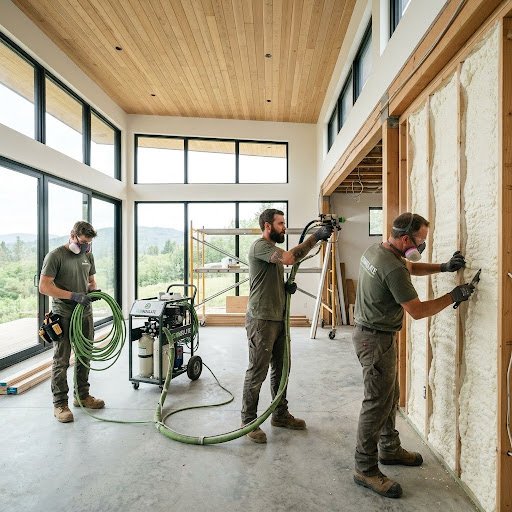
Homeowners across the country are quietly making one of the most impactful upgrades to their properties—and it has nothing to do with a kitchen remodel or a new coat of paint. Spray foam insulation is transforming homes from the inside out, delivering energy savings, structural reinforcement, and year-round comfort that traditional insulation simply can’t match. If you’ve been sitting on the fence about upgrading your insulation, this post will show you exactly why spray foam is worth every penny.
What Makes Spray Foam Insulation Different From Traditional Options?
Most homes are still insulated with fiberglass batts or blown-in cellulose—materials that have been around for decades. While these options do provide some level of thermal resistance, they fall short in a critical area: air sealing.
Fiberglass insulation, for example, can lose up to 50% of its effectiveness when air moves through it. It doesn’t seal gaps, cracks, or penetrations—it just sits in place while conditioned air leaks right past it. Spray foam, on the other hand, expands on contact, filling every crevice and creating a continuous air barrier that drastically reduces energy loss.
There are two main types of spray foam:
- Open-cell spray foam: Softer and more flexible, with a lower R-value per inch. It’s excellent for interior walls and soundproofing.
- Closed-cell spray foam: Denser and more rigid, with a higher R-value and superior moisture resistance. Ideal for attics, crawl spaces, basements, and exterior applications.
Both types outperform traditional insulation in airtightness—and that’s what makes them genuinely transformative.
The Real-World Benefits Homeowners Are Experiencing
The numbers speak for themselves. According to the U.S. Department of Energy, air leakage accounts for 25–40% of the energy used for heating and cooling in a typical home. Spray foam insulation directly addresses this by eliminating the pathways through which that energy escapes.
Here’s what homeowners consistently report after having spray foam installed:
Lower Energy Bills Month After Month
Reduced air infiltration means your HVAC system doesn’t have to work as hard to maintain a comfortable temperature. Many homeowners see a reduction in heating and cooling costs of 30–50% after switching to spray foam. Over the lifespan of the product—which can exceed 20 years—those savings add up to thousands of dollars.
A More Comfortable Living Environment
Drafts, hot spots, and cold rooms are often symptoms of poor insulation and air sealing. Spray foam eliminates these inconsistencies by creating a thermal envelope that keeps conditioned air exactly where it’s supposed to be. The result is a home that feels more comfortable in every season, regardless of what the weather is doing outside.
Improved Indoor Air Quality
This benefit often surprises homeowners. Because spray foam seals the building envelope so effectively, it reduces the infiltration of outdoor pollutants, allergens, and humidity. For families with respiratory sensitivities or allergy concerns, this can make a meaningful difference in day-to-day wellbeing.
Structural Reinforcement
Closed-cell spray foam bonds directly to the surfaces it’s applied to, adding rigidity to walls, rooflines, and foundations. This structural benefit is particularly valuable in regions prone to high winds, storms, or seismic activity.
Moisture and Mold Resistance
Closed-cell foam acts as a vapor barrier, preventing moisture from accumulating within wall cavities and structural components. Moisture intrusion is one of the leading causes of mold growth and wood rot—two problems that are expensive to remediate and damaging to both health and property value.
Where Can Spray Foam Insulation Be Applied?
One of the biggest advantages of spray foam is its versatility. Professional contractors can apply it in virtually any area of a home or commercial building, including:
- Attics and rooflines: One of the highest-impact applications, given how much heat is gained or lost through the roof
- Crawl spaces: Sealing and insulating crawl spaces protects plumbing, reduces moisture, and improves floor-level comfort
- Basements and rim joists: Often overlooked, rim joists are a major source of air leakage in older homes
- Exterior walls: New construction and retrofit applications both benefit from spray foam’s superior R-value
- Garages and workshops: Spray foam keeps these spaces usable year-round without overloading heating or cooling systems
- Commercial and industrial buildings: Large-scale applications deliver proportionally significant energy savings for businesses
Is Spray Foam Insulation Worth the Investment?
Spray foam insulation costs more upfront than fiberglass or cellulose. That’s a straightforward fact. But the comparison changes entirely when you factor in long-term performance.
Traditional insulation degrades over time, settles, and loses effectiveness. Spray foam doesn’t sag, shift, or absorb moisture. It maintains its R-value for the lifetime of the building without requiring replacement or top-ups.
When you add the energy savings, improved HVAC longevity (your system runs less, so it lasts longer), and increased property value, the return on investment becomes compelling. Many homeowners recoup the cost of installation within a few years through reduced utility bills alone.
For new construction, incorporating spray foam from the start allows builders to downsize HVAC equipment—a significant cost reduction that offsets much of the insulation expense.
Why Professional Installation Is Non-Negotiable
Spray foam insulation is not a DIY-friendly product. The chemicals involved require proper handling, protective equipment, and precise mixing ratios to perform correctly. Improperly mixed or applied foam can shrink, off-gas harmful chemicals, or fail to adhere—undermining both performance and safety.
Professional contractors bring the equipment, training, and experience to apply spray foam correctly the first time. They assess the specific needs of each building, recommend the right product type and thickness, and ensure the installation meets local building codes and energy standards.
Choosing a Spray Foam Contractor You Can Trust
Go Green Spray Foam Professionals LLC is a team of certified, experienced spray foam specialists who have helped countless homeowners and commercial property owners cut energy costs, strengthen their buildings, and create healthier, more comfortable indoor environments through professional-grade spray foam insulation solutions — is exactly the kind of partner you want on a project like this.
When evaluating spray foam contractors, look for:
- Verified experience with both open-cell and closed-cell applications
- Proper licensing and insurance
- Transparent pricing and written proposals
- Positive reviews from local customers
- A commitment to using quality materials from reputable manufacturers
The difference between a great installation and a problematic one often comes down to who you hire. Take the time to choose a contractor with a proven track record.
The Bottom Line: Spray Foam Delivers Where It Counts
Spray foam insulation isn’t a trend—it’s a proven, high-performance building solution that continues to outperform every alternative on the market. The combination of superior air sealing, thermal performance, moisture resistance, and longevity makes it the clear choice for homeowners and builders who want real results.
If your home feels drafty, your energy bills are climbing, or you’re simply ready to invest in a lasting upgrade, spray foam insulation is one of the highest-return improvements you can make. The technology is mature, the results are consistent, and the right professional team will make the entire process seamless.
Your home works hard to keep you comfortable. Spray foam insulation helps it do that job better—every single day.